
Technological change has diversified contemporary stressors and increased individuals’ exposure to potentially stressful digital stimuli. These stimuli are inherently dynamic, continually changing in form, intensity, and patterns of exposure. In response to this evolving environment, the present study examined the roles of passive coping strategies and the perceived effects of classical music in supporting stress regulation and emotional recovery. To investigate these relationships, an online survey was administered to 236 adults. Participants reported their use of coping strategies, music-related emotional and cognitive experiences, perceived effects of classical music, and mood enhancement. Pearson correlation analysis was used to identify associations among the variables. Multiple regression analysis was conducted to determine significant predictors of mood enhancement, while structural equation modeling was employed to test hypothesized pathways linking passive coping strategies to mood enhancement, with perceived classical music effects specified as a potential mediator. Mood enhancement was positively associated with emotional diversification, executive control, emotional exploration, and perceived effects of classical music. Active relief seeking, emotional diversification, executive control, and perceived classical music effects emerged as positive predictors of mood enhancement, whereas relaxation techniques showed a negative association. Passive coping strategies were also positively associated with both perceived classical music effects and mood enhancement. Moreover, perceived classical music effects were strongly associated with mood enhancement and appeared to mediate the relationship between passive coping strategies and mood enhancement. These findings suggest that passive coping behaviors, such as spending time alone and resting, may contribute to mood improvement when combined with emotionally and cognitively engaging experiences. Classical music may therefore serve as an accessible complementary resource for everyday stress management and emotional regulation.
| Published in | American Journal of Applied Psychology (Volume 15, Issue 4) |
| DOI | 10.11648/j.ajap.20261504.18 |
| Page(s) | 157-167 |
| Creative Commons |
This is an Open Access article, distributed under the terms of the Creative Commons Attribution 4.0 International License (http://creativecommons.org/licenses/by/4.0/), which permits unrestricted use, distribution and reproduction in any medium or format, provided the original work is properly cited. |
| Copyright |
Copyright © The Author(s), 2026. Published by Science Publishing Group |
Classical Music, Passive Coping Strategies, Mood Enhancement, Stress Management, Emotional Regulation
Variable | N | Mean | SD | Min | Max |
|---|---|---|---|---|---|
Gender | 236 | .64 | .48 | 0 | 1 |
Married | 236 | .47 | .50 | 0 | 1 |
Age | 236 | 37.45 | 11.25 | 21 | 73 |
Education | 236 | 4.58 | .99 | 1 | 6 |
SES | 236 | 4.66 | 1.79 | 1 | 10 |
Expense Art | 236 | 8.42 | 8.86 | 0 | 60 |
Relief Solitary | 236 | 3.79 | .78 | 1 | 5 |
Relief Rest | 236 | 3.86 | .77 | 1 | 5 |
Relief Digital | 236 | 3.44 | .87 | 1 | 5 |
Seek Active Relief | 236 | 3.68 | .61 | 2 | 5 |
Social Withdrawal | 236 | 3.65 | .86 | 1 | 5 |
Cognitive Appraisal | 236 | 3.61 | .73 | 2 | 5 |
Awareness Trigger | 236 | 3.49 | .72 | 2 | 5 |
Relaxation Techniques | 236 | 3.52 | .83 | 1 | 5 |
Emotional Discharge | 236 | 3.69 | .73 | 1 | 5 |
Emotional Exploration | 236 | 3.63 | .81 | 1 | 5 |
Emotional Diversification | 236 | 3.89 | .70 | 1 | 5 |
Executive Control | 236 | 3.87 | .70 | 1 | 5 |
Spatial Temporal | 236 | 3.69 | .83 | 1 | 5 |
Effects of Classical Music | 236 | 3.87 | .74 | 1 | 5 |
Mood Enhancement | 236 | 4.06 | .65 | 1 | 5 |
Variables | Sample Question Items | Cronbach’s alpha |
|---|---|---|
Relief Solitary | I relieve stress by spending time alone. When I feel bad, I seek out a quiet place. When I feel bad, I spend time in places with fewer people. | .840 |
Relief Rest | When I feel bad, I sleep or take a break. Sleeping or resting makes me feel better. When I feel bad, resting or take a nap helps me recover. | .844 |
Relief Digital | When I feel bad, I use my smartphone or computer. I use social media to shift my mood. I relieve stress by watching streaming videos like YouTube or Netflix. | .821 |
Active Relief Seeking | When I feel bad, I look for ways to change my mood. When my body feels tense, I look for ways to relieve it. I take action to reduce stress before it gets worse. | .765 |
Social Withdrawal | When I feel bad, I avoid people. When I feel bad, I avoid interaction with others. When I feel emotionally drained, I distance myself from other people. | .884 |
Emotional Discharge via Music | I listen to music to relieve pent-up emotions. I listen to music to express suppressed feelings. I listen to music to let go of depressive emotions. | .842 |
Emotional Exploration via Music | I organize my complex emotions while listening to music. I reflect on my feelings and state of mind while listening to music. I use music to check in with my honest emotional state. | .896 |
Emotional Diversification via Music | Music makes my emotions more colorful. Music allows me to experience a variety of emotions. Music provides opportunities to experience diverse emotions. | .864 |
Executive Control via Music | Music improves my ability to regulate emotions. Music enhances my ability to organize complex thoughts. Music helps me process complex thoughts and emotions. | .831 |
Cognitive Appraisal | When I feel negative emotions, I try to find a logical solution. I identify situation or condition that trigger negative emotions in time. I objectively examine myself to understand negative emotions. | .849 |
Spatial Temporal via Music | Listening to certain music enlivens meaningful places from the past. Listening to certain music reminds me of places I used to live long ago. Listening to certain music evokes memories of places I visited long ago. | .871 |
Awareness Trigger | I recognize the cause of negative emotions before they arise. I quickly identify factors that make me uncomfortable. I promptly identify events or factors that trigger stress. | .824 |
Relaxation Techniques | When I feel stressed, I practice meditation or deep breathing. When I feel tense, I try to calm myself through meditation or breathing. Meditation or breath control helps me regulate negative emotions. | .880 |
Mood Enhancement via Music | I feel better when I listen to music while engaging in activities. Engaging in activities with music makes the experience more enjoyable. Listening to music during physical activity improves my mood. | .866 |
Relief Solitary | Relief Resting | Relief Digital | Active Relief Seek | Social Withdrawal | Emotional Discharge | Emotional Exploration | Emotional Diversification | Executive Control | Cognitive Appraisal | Spatial Temporal | Awareness Trigger | Relaxation Technique | Effects Classical Music | |
|---|---|---|---|---|---|---|---|---|---|---|---|---|---|---|
Relief Resting | .51*** | |||||||||||||
Relief Digital | .36*** | .39*** | ||||||||||||
Active Relief | .30*** | .27*** | .20** | |||||||||||
Social Withdraw | .56*** | .41*** | .32*** | .21** | ||||||||||
Emot’l Discharg | .21** | .20** | .23*** | .34*** | .31*** | |||||||||
Emot’l Explora. | .18** | .19** | .15* | .45*** | .21** | .68*** | ||||||||
Emot’l Diversif | .21*** | .21*** | .21** | .50*** | .14* | .57*** | .58*** | |||||||
Executive Ctrl | .29*** | .28*** | .20** | .50*** | .20** | .53*** | .59*** | .60*** | ||||||
Cogn. Appraisal | .22*** | .13* | .17** | .49*** | .14* | .23*** | .18** | .33*** | .23*** | |||||
Spatial Tempor. | .15* | .08 | .19** | .25*** | .12 | .38*** | .34*** | .48*** | .39*** | .16* | ||||
Aware. Trigger | .20** | .22*** | .34*** | .50*** | .16* | .29*** | .32*** | .31*** | .31*** | .61*** | .20** | |||
Relax. Techniq. | .29*** | .23*** | .16* | .51*** | .22*** | .34*** | .45*** | .30*** | .41*** | .35*** | .22*** | .35*** | ||
Effects Classical | .22*** | .18** | .09 | .44*** | .22*** | .43*** | .53*** | .51*** | .62*** | .26*** | .28*** | .35*** | .36*** | |
Mood Enhance. | .27*** | .29*** | .18** | .58*** | .13* | .50*** | .52*** | .65*** | .56*** | .33*** | .36*** | .41*** | .28*** | .53*** |
Mood Enhancement | Unstandardized Coefficient | Standardized | t | p-value | |
|---|---|---|---|---|---|
B | Standard Error | ||||
Const. | .821 | .29 | . | 2.83 | .005 |
Education | -.006 | .03 | -.01 | -.20 | .844 |
Age | -.003 | .00 | -.05 | -1.20 | .232 |
Expenditure Art | -.002 | .00 | -.03 | -.63 | .527 |
Active Relief | .320 | .07 | .30 | 4.92 | .000 |
Social Withdrawal | -.046 | .04 | -.06 | -1.28 | .202 |
Emot’l Discharge | .103 | .06 | .12 | 1.79 | .074 |
Emot’l Exploration | .026 | .06 | .03 | .46 | .644 |
Emot’l Diversifi. | .248 | .06 | .27 | 3.91 | .000 |
Executive Control | .123 | .06 | .13 | 2.03 | .044 |
Cognitive Appraisal | -.014 | .05 | -.02 | -.26 | .796 |
Spatial Temporal | .025 | .04 | .03 | .62 | .538 |
Awareness Trigger | .097 | .05 | .11 | 1.82 | .070 |
Relax Technique | -.110 | .04 | -.14 | -2.54 | .012 |
Classical Music | .124 | .05 | .14 | 2.34 | .020 |
Variable | Observation | Skewness | Kurtosis | Adj. Chi2 | Prob.>Chi2 |
|---|---|---|---|---|---|
Residuals | 236 | .066 | .446 | 4.00 | .135 |
Mood Enhancement | VIF | 1/VIF |
|---|---|---|
Emotional Exploration | 2.60 | 38 |
Emotional Diversification | 2.43 | 41 |
Executive Control | 2.27 | 44 |
Emotional Discharge | 2.23 | 45 |
Active Relief Seeking | 2.00 | 50 |
Effects of Classical Music | 1.92 | 52 |
Cognitive Appraisal | 1.87 | 54 |
Awareness Trigger | 1.84 | 54 |
Relaxation Technique | 1.59 | 63 |
Spatial Temporal | 1.38 | 72 |
Social Withdrawal | 1.17 | 85 |
Age | 1.09 | 92 |
Expenditure on Art | 1.05 | 95 |
Education | 1.03 | 97 |
Mean VIF | 1.75 |
| TLI | CFI | RMSEA (90% CI) | SRMR |
|---|---|---|---|---|
25.054 (24) | 998 | 999 | 014 (000~.055) | 027 |
Estimates | Coefficients | ||||
|---|---|---|---|---|---|
Unstandardized | Standardized | ||||
Structural | Passive Coping Stratrg. | | Classical Music | .441*** | .274 |
Passive Coping Stratrg. | | Mood Enhancement | .374*** | .270 | |
Classical Music | | Mood Enhancement | .460*** | .533 | |
Measurement | Passive Coping Stratrg. | | Relief in Solitary | 1.180*** | .686 |
| Relief in Rest & Sleep | 1.259*** | .744 | ||
| Relief in Digital Media | 1.000*** | .522 | ||
Classical Music Effect | | Classical Music 1 | 1.000*** | .858 | |
| Classical Music 2 | .882*** | .831 | ||
| Classical Music 3 | 1.000*** | .891 | ||
Mood Enhancement | | Mood Enhancement 1 | .996*** | .849 | |
| Mood Enhancement 2 | .897*** | .745 | ||
| Mood Enhancement 3 | 1.000*** | .895 | ||
| [1] | Baumgartner, T., Esslen, M., & Jäncke, L. (2006). From emotion perception to emotion experience: Emotions evoked by pictures and classical music. International Journal of Psychophysiology, 60(1), 34-43. |
| [2] | Chapin, H., Jantzen, K., Kelso, J. S., Steinberg, F., & Large, E. (2010). Dynamic emotional and neural responses to music depend on performance expression and listener experience. PloS One, 5(12), e13812. |
| [3] | Sala, G., & Gobet, F. (2017). When the music’s over: Does music skill transfer to children’s and young adolescents’ cognitive and academic skills? A meta-analysis. Educational Research Review, 20, 55–67. |
| [4] | Sokhadze, E. M. (2007). Effects of music on the recovery of autonomic and electrocortical activity after stress induced by aversive visual stimuli. Applied Psychophysiology and Biofeedback, 32, 31-50. |
| [5] | Dong, Y. (2024). The Application of Classical and Popular Music in Music Therapy. Journal of Humanities, Arts and Social Science, 8(10). 2358-2362. |
| [6] | Peistaraite, U., & Clark, T. (2020). Emotion regulation processes can benefit self-regulated learning in classical musicians. Frontiers in Psychology, 11, 568760. |
| [7] | Rickard, N. S., Wong, W. W., & Velik, L. (2012). Relaxing music counters heightened consolidation of emotional memory. Neurobiology of Learning and Memory, 97(2), 220-228. |
| [8] | Zeidner, M., & Endler, N. S. (1996). Handbook of coping: Theory, research, applications. New York: Wiley. |
| [9] | Nielsen, M. B., & Knardahl, S. (2014). Coping strategies: A prospective study of patterns, stability, and relationships with psychological distress. Scandinavian Journal of Psychology, 55(2), 142-150. |
| [10] | Dougall, A. L., Wroble Biglan, M. C., Swanson, J. N., & Baum, A. (2012). Stress, coping, and immune function. In I. B. Weiner, R. J. Nelson, & S. J. Y. Mizumori (Eds.), Handbook of psychology: Behavioral neuroscience (Vol. 3, 2nd ed., pp. 440–460). New York, NY: John Wiley & Sons. |
| [11] | Snow-Turek, L. A., Norris, M. P., & Tan, G. (1996). Active and passive coping strategies in chronic pain patients. Pain, 64(3), 455-462. |
| [12] | Delcea, C. (2021). The relationship between perceived stress and coping mechanisms in adolescents. In The International Conference of Forensic Medicine (4th ed., September 30–October 3, 2021, Cluj-Napoca, Romania, pp. 175–181). |
| [13] | Schriewer, K., & Bulaj, G. (2016). Music streaming services as adjunct therapies for depression, anxiety, and bipolar symptoms: convergence of digital technologies, mobile apps, emotions, and global mental health. Frontiers in Public Health, 4, 217. |
| [14] | Kanazawa, S., & Perina, K. (2012). Why more intelligent individuals like classical music. Journal of Behavioral Decision Making, 25(3), 264-275. Koelsch, S. (2014). Brain correlates of music-evoked emotions. Nature Reviews Neuroscience, 15(3), 170-180. |
| [15] | Wiseheart, M., Viswanathan, M., & Bialystok, E. (2016). Flexibility in task switching by monolinguals and bilinguals. Bilingualism: Language and Cognition, 19(1), 141-146. |
| [16] | Paap, K. R., Johnson, H. A., & Sawi, O. (2015). Bilingual advantages in executive functioning either do not exist or are restricted to very specific and undetermined circumstances. Cortex, 69, 265–278. |
| [17] | Paap, K. R., Johnson, H. A., & Sawi, O. (2015). Bilingual advantages in executive functioning either do not exist or are restricted to very specific and undetermined circumstances. Cortex, 69, 265–278. |
| [18] | D’Souza, A. A., Moradzadeh, L., & Wiseheart, M. (2018). Musical training, bilingualism, and executive function: Working memory and inhibitory control. Cognitive Research: Principles and Implications, 3, 1–18. |
| [19] | Pallesen, K. J., Brattico, E., Bailey, C. J., Korvenoja, A., Koivisto, J., Gjedde, A., & Carlson, S. (2010). Cognitive control in auditory working memory is enhanced in musicians. PLOS ONE, 5(6), e11120. |
| [20] | Travis, F., Harung, H. S., & Lagrosen, Y. (2011). Moral development, executive functioning, peak experiences, and brain patterns in professional and amateur classical musicians: Interpreted in light of a unified theory of performance. Consciousness and Cognition, 20(4), 1256–1264. |
| [21] | Field, A. (2013). Discovering statistics using IBM SPSS Statistics (4th ed.). Sage. |
APA Style
Kwon, R. (2026). The Synergistic Effects of Passive Coping Strategies and Classical Music on Mood Enhancement. American Journal of Applied Psychology, 15(4), 157-167. https://doi.org/10.11648/j.ajap.20261504.18
ACS Style
Kwon, R. The Synergistic Effects of Passive Coping Strategies and Classical Music on Mood Enhancement. Am. J. Appl. Psychol. 2026, 15(4), 157-167. doi: 10.11648/j.ajap.20261504.18
AMA Style
Kwon R. The Synergistic Effects of Passive Coping Strategies and Classical Music on Mood Enhancement. Am J Appl Psychol. 2026;15(4):157-167. doi: 10.11648/j.ajap.20261504.18
@article{10.11648/j.ajap.20261504.18,
  author = {Raymond Kwon},
  title = {The Synergistic Effects of Passive Coping Strategies and Classical Music on Mood Enhancement},
  journal = {American Journal of Applied Psychology},
  volume = {15},
  number = {4},
  pages = {157-167},
  doi = {10.11648/j.ajap.20261504.18},
  url = {https://doi.org/10.11648/j.ajap.20261504.18},
  eprint = {https://article.sciencepublishinggroup.com/pdf/10.11648.j.ajap.20261504.18},
  abstract = {Technological change has diversified contemporary stressors and increased individuals’ exposure to potentially stressful digital stimuli. These stimuli are inherently dynamic, continually changing in form, intensity, and patterns of exposure. In response to this evolving environment, the present study examined the roles of passive coping strategies and the perceived effects of classical music in supporting stress regulation and emotional recovery. To investigate these relationships, an online survey was administered to 236 adults. Participants reported their use of coping strategies, music-related emotional and cognitive experiences, perceived effects of classical music, and mood enhancement. Pearson correlation analysis was used to identify associations among the variables. Multiple regression analysis was conducted to determine significant predictors of mood enhancement, while structural equation modeling was employed to test hypothesized pathways linking passive coping strategies to mood enhancement, with perceived classical music effects specified as a potential mediator. Mood enhancement was positively associated with emotional diversification, executive control, emotional exploration, and perceived effects of classical music. Active relief seeking, emotional diversification, executive control, and perceived classical music effects emerged as positive predictors of mood enhancement, whereas relaxation techniques showed a negative association. Passive coping strategies were also positively associated with both perceived classical music effects and mood enhancement. Moreover, perceived classical music effects were strongly associated with mood enhancement and appeared to mediate the relationship between passive coping strategies and mood enhancement. These findings suggest that passive coping behaviors, such as spending time alone and resting, may contribute to mood improvement when combined with emotionally and cognitively engaging experiences. Classical music may therefore serve as an accessible complementary resource for everyday stress management and emotional regulation.},
 year = {2026}
}
TY  - JOUR
T1  - The Synergistic Effects of Passive Coping Strategies and Classical Music on Mood Enhancement
AU  - Raymond Kwon
Y1  - 2026/08/26
PY  - 2026
N1  - https://doi.org/10.11648/j.ajap.20261504.18
DO  - 10.11648/j.ajap.20261504.18
T2  - American Journal of Applied Psychology
JF  - American Journal of Applied Psychology
JO  - American Journal of Applied Psychology
SP  - 157
EP  - 167
PB  - Science Publishing Group
SN  - 2328-5672
UR  - https://doi.org/10.11648/j.ajap.20261504.18
AB  - Technological change has diversified contemporary stressors and increased individuals’ exposure to potentially stressful digital stimuli. These stimuli are inherently dynamic, continually changing in form, intensity, and patterns of exposure. In response to this evolving environment, the present study examined the roles of passive coping strategies and the perceived effects of classical music in supporting stress regulation and emotional recovery. To investigate these relationships, an online survey was administered to 236 adults. Participants reported their use of coping strategies, music-related emotional and cognitive experiences, perceived effects of classical music, and mood enhancement. Pearson correlation analysis was used to identify associations among the variables. Multiple regression analysis was conducted to determine significant predictors of mood enhancement, while structural equation modeling was employed to test hypothesized pathways linking passive coping strategies to mood enhancement, with perceived classical music effects specified as a potential mediator. Mood enhancement was positively associated with emotional diversification, executive control, emotional exploration, and perceived effects of classical music. Active relief seeking, emotional diversification, executive control, and perceived classical music effects emerged as positive predictors of mood enhancement, whereas relaxation techniques showed a negative association. Passive coping strategies were also positively associated with both perceived classical music effects and mood enhancement. Moreover, perceived classical music effects were strongly associated with mood enhancement and appeared to mediate the relationship between passive coping strategies and mood enhancement. These findings suggest that passive coping behaviors, such as spending time alone and resting, may contribute to mood improvement when combined with emotionally and cognitively engaging experiences. Classical music may therefore serve as an accessible complementary resource for everyday stress management and emotional regulation.
VL  - 15
IS  - 4
ER  -
Science Department, Seoul International School, Seongnam-si, South Korea
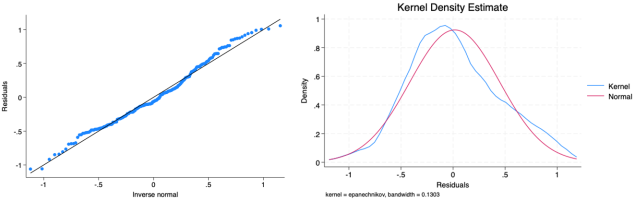
Figure 1.
Quantile-Quantile (QQ) plot & Kernel Density Estimate.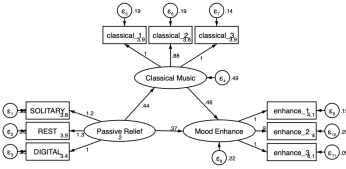
Figure 2. Structural Equation Model for Mood Enhancement.

Information



 Share This Article
 Twitter
 Linked In
 Facebook
 Copy
Copy Download